

In the previous chapter, Chapter 10: The Global Table, we looked outward — at where Canada sits in a shifting world, and how power, alliances, and instability are reshaping the choices before us.
This chapter turns inward.
If you’re new to the series, you can begin at the start here: A Quiet Reckoning — Series Page. Each chapter builds toward the question this one now asks directly:
What do we choose to build?
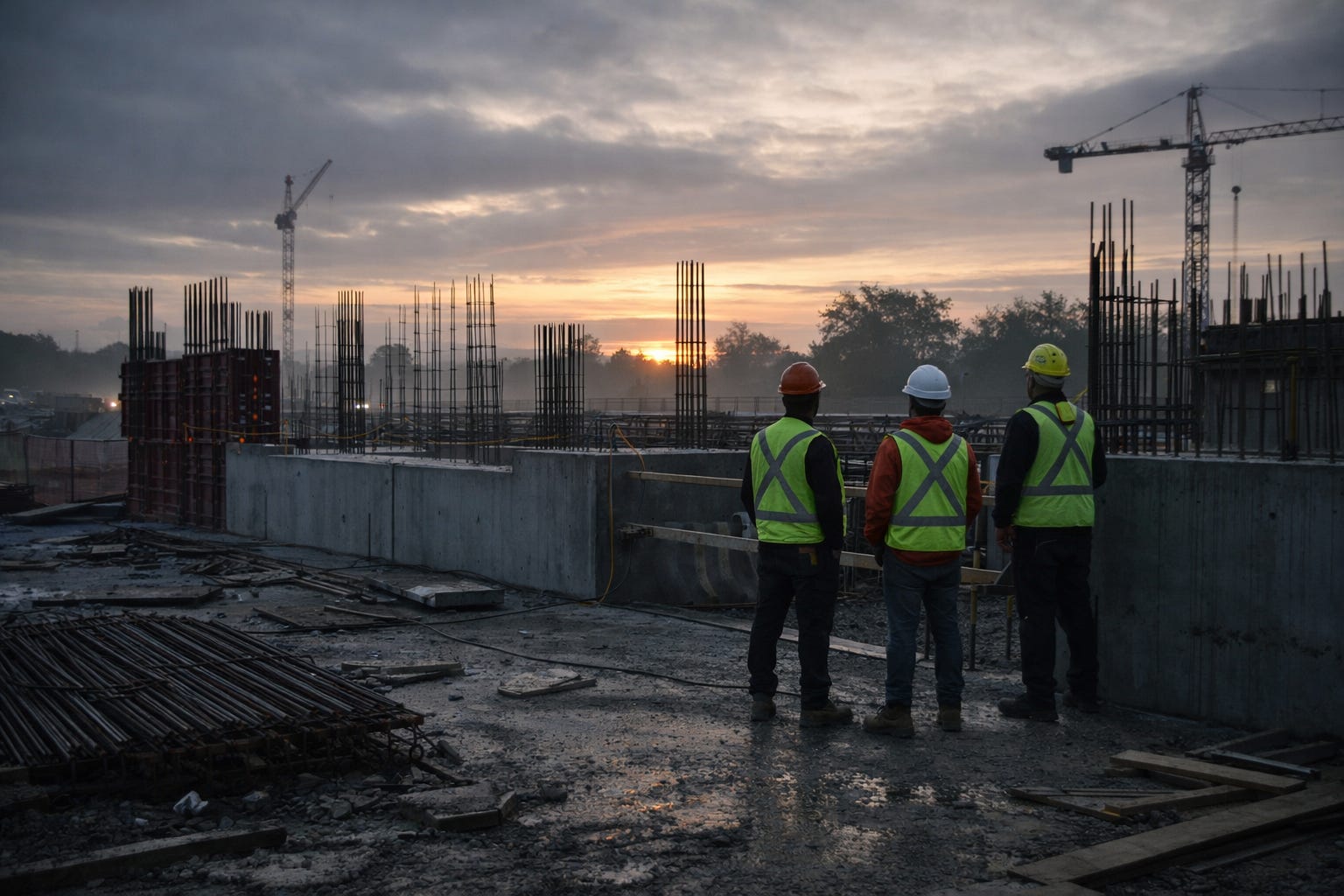
Chapter 11 — What We Choose to Build
Nationhood as a Collective Practice
Canada has never lacked ambition. From the railways and universal healthcare to Arctic radar lines and ports, this country has built across impossible distances and with limited means. But what we choose to build — and who we include in that work — has always defined the nation more than steel or concrete ever could.
In a moment of global instability and domestic fragility, the choice to build is no longer just practical.
It is philosophical.
And it is political.
1. Foundations Laid — But Not Finished
Over the course of this series, we’ve traced Canada’s quiet build-up: from postwar consensus through Cold War readiness, from federal ambition to decades of drift. What remains today is uneven — aging infrastructure, a stretched healthcare system, fragile supply chains, and regions left behind.
We built before.
But we stopped before the work was finished.
Not simply because of budget pressures or electoral cycles, but because the idea of the nation as a shared project slowly gave way to market logic and fragmented governance. Nation-building was recast as inefficiency. Coordination became overreach. Long-term planning lost ground to short-term return.
To reclaim nation-building is to reclaim a long view of sovereignty.
2. The New Nation-Building Toolkit
The 21st century does not require a return to old blueprints. It requires new foundations:
Digital infrastructure — broadband as necessity, not luxury
Climate-resilient housing, especially in northern and Indigenous communities
Clean energy corridors, including microgrids and storage
Coastal and Arctic ports as anchors of sovereignty and trade
Local food production to reduce import dependence
Cold-chain logistics for healthcare delivery in remote regions
These are today’s rail lines and grain elevators.
They won’t win applause tomorrow — but they will determine what kind of country exists a decade from now.
3. Building as Policy, Not Performance
Modern politics rewards announcements more than outcomes. But nation-building is slow work.
It requires:
Cross-jurisdictional coordination
Multi-decade funding commitments
Public trust in planning and delivery
A ribbon-cutting is not a result.
A functioning system is.
If Canada is serious about rebuilding capacity, it must stop confusing infrastructure with spectacle and start measuring success by durability, access, and resilience.
4. Who Builds Matters
The tools of nation-building may be technical — but the process is deeply social.
Indigenous governments must lead in their own territories, with real fiscal and operational autonomy
Municipalities, carrying the weight of housing, transit, and social delivery, need stable resources and flexibility
Provinces and territories must act as partners, not gatekeepers
Civic voices, especially youth and under-represented communities, need seats at the table
This isn’t idealism. It’s effectiveness.
Infrastructure lasts longer — and serves more people — when those who rely on it help design it.
5. The Obstacles We Keep Ignoring
We cannot build what we refuse to govern.
Persistent barriers remain:
Federal–provincial jurisdictional gridlock
Permitting delays that stall essential projects for years
Labour shortages in skilled trades and engineering
Misinformation that erodes public trust
Rebuilding will require faster coordination, clearer authority, and serious investment in skills — not just capital.
6. Why We Must Choose to Build
Nation-building is not nostalgia.
It is preparation.
Preparation for climate disruption.
For geopolitical uncertainty.
For demographic change and technological shifts.
Canada does not need a single grand project.
It needs a hundred small ones — rooted in place, designed for people, and built to endure.
We have done this before.
The question now is not whether we can —
but whether we will.
Chapter Close
🧭 This is Chapter 11 of A Quiet Reckoning — a long-form civic series tracing how Canada built, drifted, and now faces a choice about what it is willing to rebuild.
💬 I welcome thoughtful conversation in the comments — your reflections help shape how this work continues.
💚 Become a paid subscriber to support independent Canadian writing and access downloadable PDFs on Between the Lines.
☕ Buy me a coffee: https://buymeacoffee.com/lenispot
Quiet work takes time.
Reader support makes it possible.
— Leni 💚
The framing of infrastructure as philosophy rather than just logistics is spot on. The microgrids reference in the energy toolkit caught my attention becuase that's exactly the kind of decentralized resilience that makes sense for Canada's geography. I've seen how centralized grids create single points of failure, especially in remote communities. The hundred small projects idea is more politically difficult than one big ribbon-cutting, but it actually matches how robust systems get built. Durability over spectacle is the right metric.
Your piece makes a strong case for shifting back to deliberate, resilient infrastructure as nation-building. It's a fair point, especially with aging assets and new needs like Arctic ports. The federal side is moving on this, though. The Parliamentary Budget Officer's September update estimates $159 billion in infrastructure spending from 2025-26 to 2029-30. That's significant, but execution often lags due to coordination hurdles you mentioned. The real question is whether it prioritizes those enduring, place-specific projects over short-term wins.