

What’s Really Causing the Strain: Housing, Healthcare, and the Systems We Forgot to Build
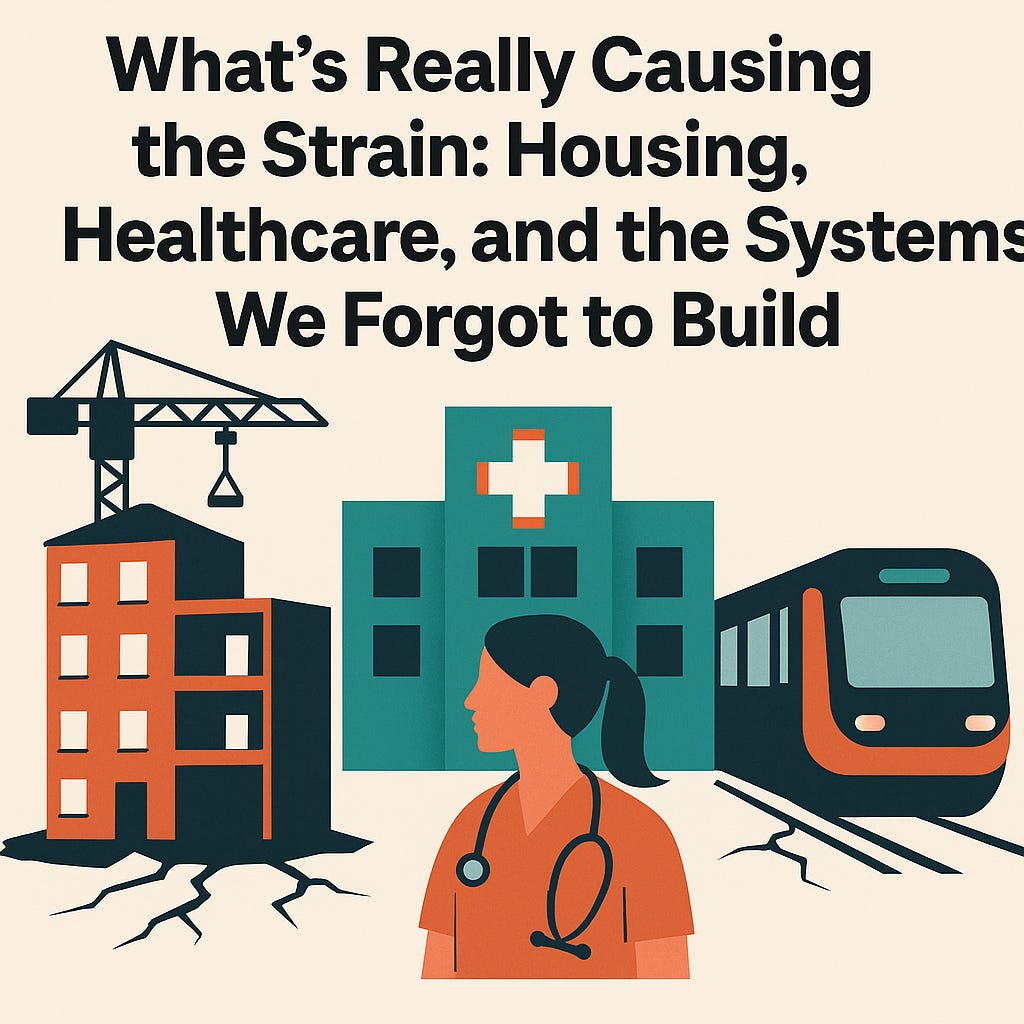
Canada’s growth didn’t break our systems. Decades of underbuilding did.

In Part One, we looked at the numbers. Immigration isn’t just important—it’s the only reason Canada is still growing. Our fertility rate is at historic lows, our population is aging, and without newcomers, we would already be in a period of demographic decline.
So if immigration isn’t the real problem, what is?
This time, let’s talk about the systems that failed to keep up.
The Housing Gap Was Already There
Canada didn’t suddenly run out of housing. We stopped building it—long before the latest immigration increases. (See Build Canada Homes: Can Ottawa’s Big Housing Bet Deliver? and When Canada Gave Away Its Housing—and Nobody Noticed for more on Canada’s history on housing and what is changing.)
The Canada Mortgage and Housing Corporation estimates that we need to build 430,000 to 480,000 homes per year through 2035 just to restore affordability. In 2023, we built just over 240,000.
That’s not an immigration crisis. That’s a policy failure. One that goes back decades.
💬 Good energy feeds good energy. If this post gave you something to think about, share the ripple.
Immigration Without Infrastructure = Trouble
Where the disconnect really shows is in temporary residents —international students, workers, asylum seekers—who often aren’t factored into housing or transit plans. The result? Pressure on systems that were already under strain.
- Shelters in major cities at capacity
- Schools scrambling for space
- Transit systems falling behind ridership
But newcomers didn’t cause these cracks. They’re just walking into them.
Healthcare Was Already Under Strain
Ask anyone who works in healthcare, and they’ll tell you: burnout, staff shortages, and aging equipment were problems well before 2020.
The “healthy immigrant effect” means most newcomers arrive in good shape—but after 5–10 years, their health outcomes match the Canadian norm. That means their need for care rises just like everyone else’s.
Planning for this isn’t about “making room for them.” It’s about building the system to serve all of us—including future us.
A Systemic Mismatch
This is the heart of the issue: we’ve added people, but we haven’t added capacity.
We haven’t:
Built enough housing
Trained enough skilled workers
Expanded health services fast enough
Created incentives for regional growth
Streamlined pathways to full participation
Immigration didn’t break the system. Under-planning did. And the under-planning (and underinvestment) goes back decades.
The Myth of “Negative Growth” as a Fix
Cutting back immigration might relieve pressure in the short term—but at what cost?
A smaller workforce means fewer homes get built
Fewer students = weaker university funding
Fewer workers = more delayed care and services
We’re already in a hole. Shrinking the population won’t fill it. Only investment and integration will.
Want to Go Deeper?
In Part Three, we’ll explore the immigration categories themselves—how international students, work permits, and permanent residents all contribute differently, and what a smarter, more strategic system could actually look like.
💬 Good energy feeds good energy.
If this post gave you something to think about, leave a comment and share the ripple.